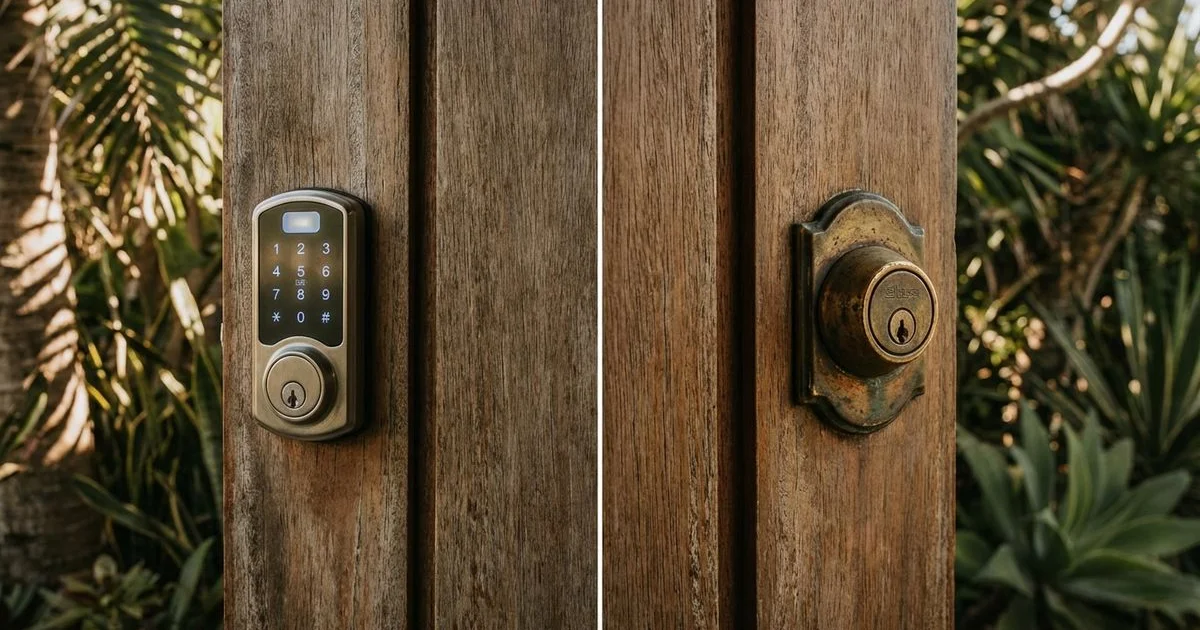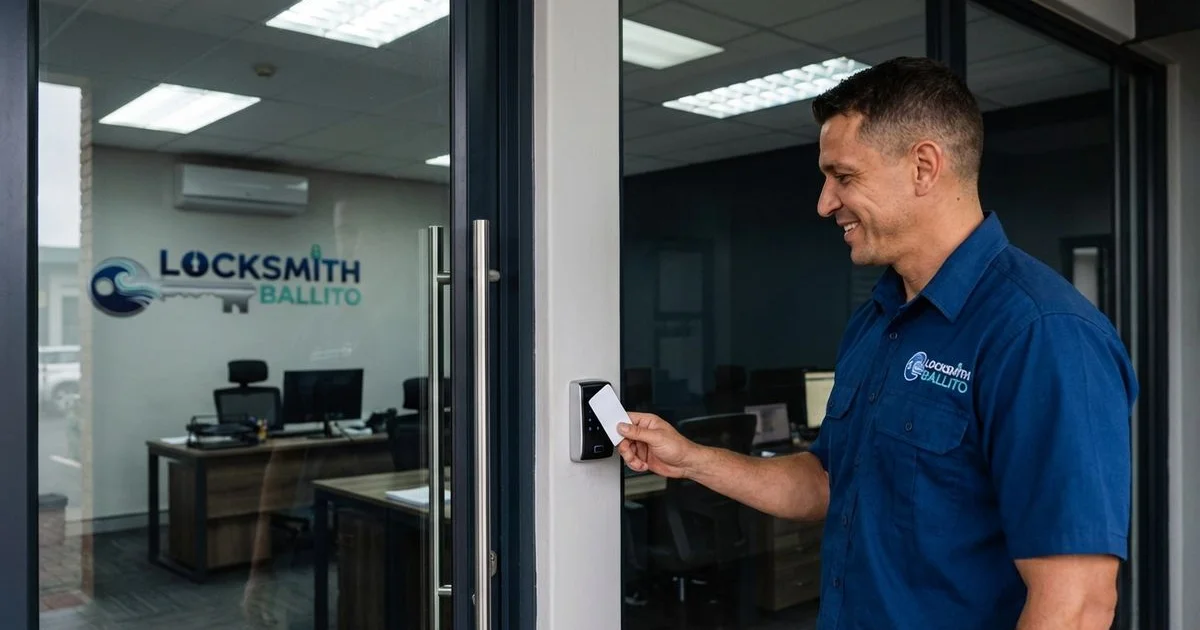
If you manage a business in Ballito, you have likely noticed the rapid commercial expansion from the Junction to the new developments near the N2. Growth is excellent for revenue, but it introduces complex security gaps that standard locks simply cannot fill. We talk to business owners every week who are frustrated by the lack of visibility regarding who enters their premises.
Standard keys offer zero data. You hand them out, hope they are not copied at a kiosk in the mall, and pray they are returned when a staff member resigns.
We have found that modern access control turns this vulnerability into a strength. It provides data, control, and peace of mind without breaking the bank. This guide outlines the specific systems that work best in our coastal environment.
Why Small Businesses Need Access Control
Many local business owners assume electronic access is only for corporate giants in Umhlanga. The reality is quite different. Small teams actually benefit the most from automated security because they often lack dedicated security guards.
Eliminating the Rekeying Expense Lost keys are a constant drain on operational budgets. Replacing a high-security cylinder and issuing new keys to five staff members can easily cost over R2,500. If you prefer mechanical solutions, a master key system is an alternative. An electronic system allows you to delete a lost credential in seconds.
Managing Multiple Zones Most retail spots in Ballito have a front door, a back receiving area, and a manager’s office. Carrying a heavy bunch of keys is inefficient. A single tag or code grants access to all allowed areas instantly.
Precise Accountability General retail shrinkage and internal theft remain significant challenges in South Africa. Electronic logs create an undeniable audit trail. You will know exactly who unlocked the stockroom at 07:45 AM.
Meeting Insurance Standards Insurers are increasingly strict about entry requirements. Some policies covering high-value stock specifically mandate “auditable access control” rather than simple mechanical locks.
Option 1: Key Card and Fob Systems (RFID)
How They Work
This technology uses Radio Frequency Identification (RFID). Employees carry a card or a durable plastic tag (fob) that they tap against a wall-mounted reader. The reader validates the credential and releases the magnetic lock or door strike.
Advantages
- Speed of entry allows staff to move quickly during busy shifts.
- Cost-efficiency is high, with tags often costing less than R50 each.
- Scalability makes it easy to add new doors as you expand your premises.
- Time and attendance integration is possible with many systems like ZKTeco or Paxton.
Disadvantages
- Cards can be passed between employees (buddy clocking).
- Physical tokens can still be lost or stolen.
- Older 125kHz systems are susceptible to cloning devices available online.
Best For
We recommend this for general office environments and retail stores in the Lifestyle Centre or Ballito Junction. It strikes the perfect balance between security and convenience for high-traffic doors.
Local Pricing Insight: A single-door RFID kit typically ranges from R3,500 to R8,500 depending on the brand (e.g., Hikvision vs. Paxton). Replacement tags are significantly cheaper than cutting high-security keys.
Option 2: PIN Code Keypads
How They Work
This is the simplest form of electronic access. A keypad is mounted near the entrance, and the user types in a four to six-digit code to gain entry.
Advantages
- Zero consumable costs since there are no cards to buy or replace.
- Convenience means staff never get locked out because they forgot a tag at home.
- Durability is generally high if you choose vandal-resistant metal models.
Disadvantages
- Security risks arise if staff write codes down or share them.
- Wear patterns on buttons can reveal the digits of the code over time.
- Lack of individual audit trails occurs if everyone shares a generic code like “1234.”
Best For
Storage closets, staff toilets, or internal doors where low-to-medium security is acceptable. We advise against using simple keypads for exterior perimeter doors unless they are integrated into a monitored alarm system.
Pro Tip for Coastal Durability: Ballito’s salt air corrodes cheap plastics and contacts rapidly. Always insist on a keypad with stainless steel buttons and an IP65 or higher weather rating to prevent rust and circuit failure.
Option 3: Biometric Systems
How They Work
Biometrics use unique biological traits to verify identity. Fingerprint scanners are the most common, followed by facial recognition terminals which are gaining popularity due to hygiene concerns post-pandemic.
Advantages
- True identification ensures the person entering is definitely who they claim to be.
- Elimination of lost tokens saves money and administrative headaches.
- High security makes it the standard for server rooms and cash offices.
Disadvantages
- Higher initial investment is required for the readers and software.
- False rejections can happen with dirty or cut fingers.
- POPIA compliance requires strict data handling procedures.
Understanding the POPIA Implication
Section 26 of the Protection of Personal Information Act (POPIA) classifies biometric data as “special personal information.” You cannot just install a reader and start scanning.
Compliance Checklist:
- Obtain specific, written consent from every employee.
- Document exactly how the data is encrypted and stored.
- Ensure the data is deleted securely when an employee leaves.
The Humidity Factor: Optical fingerprint sensors often struggle in Ballito’s humid summer months. We strongly suggest using multispectral imaging sensors (like those from HID or certain ZKTeco models) which can read through moisture and skin surface issues.
Best For
High-risk areas such as cash offices, server rooms, and medical dispensaries.
Option 4: Smartphone-Based Access (Mobile Credentials)
How They Work
Your phone becomes your key. Using Bluetooth Low Energy (BLE) or NFC, an app on the employee’s phone communicates with the door controller.
Advantages
- Remote management allows you to issue a “key” to a contractor instantly from your dashboard.
- Hygiene is improved as there is no need to touch a shared surface.
- Convenience is unmatched since people rarely forget their phones.
Disadvantages
- Battery dependence means a dead phone results in a lockout.
- Compatibility issues can arise with older smartphone models.
- Subscription fees apply to some cloud-based management platforms.
Best For
Coworking spaces, gyms, and modern offices with tech-savvy teams. This is also excellent for holiday letting agencies across the Dolphin Coast that need to grant temporary access to cleaners or guests without handing over physical keys.
Quick Comparison: Choosing Your System
We have compiled this comparison to help you visualize the differences.
| Feature | RFID Cards | PIN Code | Biometrics | Smartphone |
|---|---|---|---|---|
| Security Level | Medium | Low | High | High |
| Cost | Low | Very Low | High | Medium |
| Convenience | High | High | Medium | High |
| Audit Trail | Yes | Limited | Yes | Yes |
| Ideal For | General Staff | Stockrooms | Cash/Server Rooms | Managers/Contractors |
Critical Installation Considerations for the North Coast
The environment in KwaZulu-Natal is unforgiving to electronics. Installing a system designed for a dry climate in Ballito is a recipe for failure within 18 months.
Combatting Corrosion Salt spray travels further inland than you might think. We ensure all outdoor readers are sealed (potted) and that connections are housed in waterproof junction boxes.
Power Resilience Load shedding is a reality we must design around. Electronic locks require power to operate. You must decide between “Fail-Safe” (door unlocks when power cuts) and “Fail-Secure” (door stays locked).
- Fail-Safe: Required for fire escape routes. Needs a dedicated battery backup (UPS) to keep the door magnetic lock engaged during outages.
- Fail-Secure: Suitable for high-security rooms (like server rooms). The door remains locked mechanically even without power.
Surge Protection KZN electrical storms are notorious for frying circuit boards. A small investment in surge protection for your access control power supply can save you thousands in replacement costs.
Getting Started
Securing your business requires a strategy, not just a gadget. We recommend starting with a commercial locksmith site assessment to identify your traffic flows and critical vulnerabilities.
Most systems are modular. You can secure your main entrance today and add the back office next year. The priority is establishing a reliable, auditable perimeter that protects your assets and your team.