Walking into your home and realizing it has been violated is a shock that stays with you. You likely feel a mix of fear, anger, and confusion right now. Our team has helped countless Ballito families secure their properties immediately after these incidents, and we know that the first few hours are critical.
Stats SA reported in their recent Governance, Public Safety, and Justice Survey that housebreaking remains the number one crime experienced by South African households. You are not the only one facing this. We want to help you take back control.
This guide cuts through the noise to give you a precise, actionable plan. We will walk you through securing the scene, managing the police process, and handling the insurance requirements efficiently.
Step 1: Ensure Your Safety First
Stop immediately if you suspect the intruders are still on the premises. Your instinct might be to rush in and check on your valuables, but this is a dangerous mistake.
Signs of an active presence include:
- Doors or windows standing open that you definitely closed
- Unfamiliar noises like footsteps or hushed voices
- Lights that have been toggled
- An unknown vehicle idling or parked outside your gate
Retreat to a safe distance if you see any of these indicators. We recommend driving to a neighbour’s driveway or a well-lit public area before making any calls.
Never confront a burglar. Your safety is more important than any possession. Move to a neighbour’s house or your vehicle and call the police from there.
Who to Call Immediately
- SAPS (South African Police Service): Dial 10111 for the national emergency line. For faster local response in our area, call Umhlali SAPS directly at 032 947 9900 or Ballito SAPS Satellite at 032 946 0830.
- Your Security Provider: Contact your armed response provider (such as IPSS, Marshall, or Alpha Security) immediately. They often arrive faster than the police and can secure the perimeter.
- Emergency Medical Services: Dial 10177 or Netcare 911 (082 911) if anyone has been harmed.
Step 2: File a Police Report Correctly
You must open a case to get an official Case Number (CAS). Insurance companies will almost always reject a claim without this specific reference.
When the officers arrive, or when you go to the Umhlali station, be prepared to provide specific details.
The Difference Between OB and CAS Numbers
Officers might give you an “OB” (Occurrence Book) number first. This is just a log entry. You must insist on receiving the CAS number (usually sent via SMS within 12-24 hours), which follows the format: CAS 123/02/2026.
Provide the following for the statement:
- Your ID document and full contact details
- The exact time window of the incident (e.g., “Between 14:00 and 16:30”)
- A preliminary list of stolen items (you can add to this later)
- Method of entry (e.g., “Forced sliding door lock”)
Keep this number on your phone. You will need to provide it to us or any other service provider assisting with repairs.
Step 3: Document Evidence Before Cleaning
Resist the urge to clean up the glass or mess immediately. Your insurance assessor needs to see the “scene of the crime” to validate that a forceful entry occurred.
Photographic Evidence Checklist
Take high-resolution photos with your phone. Assessors prefer too many photos over too few.
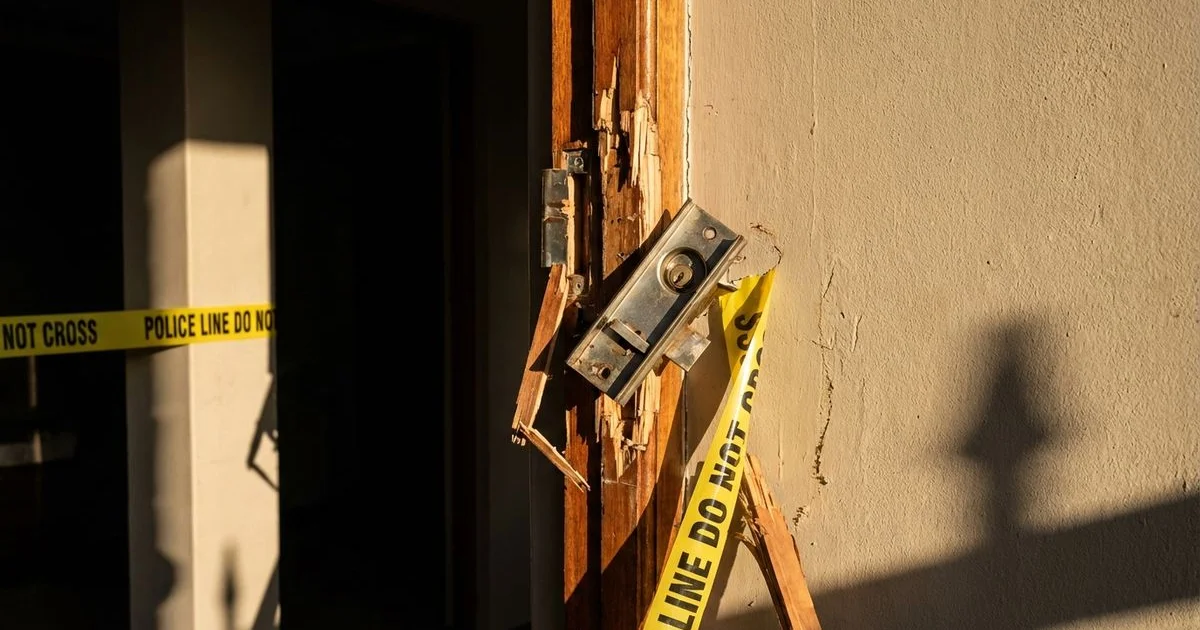
- The Point of Entry: Close-ups of the broken lock, jemmy marks on the door frame, or smashed glass.
- Context Shots: Wide-angle photos showing the room layout and the path the intruders took.
- The Mess: Photos of emptied drawers, scattered papers, or muddy footprints.
- Void Spaces: Pictures of the empty spaces where your TV, laptop, or jewellery box used to be.
The Stolen Items List
Start a written inventory immediately while your memory is fresh.
| Item Category | Description Details | Proof of Ownership |
|---|---|---|
| Electronics | Brand, Model, Serial Number | Receipt or Warranty Card |
| Jewellery | Material, Stone type, Weight | Valuation Certificate or Photos |
| Tools | Brand, Power rating | Purchase History / Box |
| Clothing | Brand, Type, Quantity | Store Receipts |
Take photos from multiple angles and include wide shots that show context. Insurance assessors need to see the overall scene, not just close-ups of damage.
Step 4: Contact Your Insurance Company
Notify your broker or insurer within 24 hours. Most South African policies have a strict notification window, and delays can complicate your payout.
Have these three things ready before you dial:
- Policy number
- SAPS CAS number
- A rough estimate of the total loss value
Understanding the “Forcible Entry” Clause
Many insurers generally require proof of “forcible and violent entry” to pay out a burglary claim. If a window was left open or a key was left under a mat, they might dispute the claim.
Follow these rules during the process:
- Retain damaged parts: Keep the broken lock or door handle until the assessor gives the go-ahead to discard it.
- Save repair receipts: We will provide you with a detailed invoice for emergency lock repairs. Submit this immediately, as emergency securing is often covered under a separate benefit from the stolen goods.
- Check your excess: Know your “first amount payable” so you can decide if smaller items are worth claiming.
Step 5: Secure Your Home Immediately
Your home is vulnerable right now. The intruders know the layout, and the entry point they used is likely broken.
Emergency Locksmith Services
We recommend getting a professional residential security expert out immediately to secure the property. A qualified technician will address several critical areas.
- Temporary Boarding: Securing smashed windows with plyboard if glazing cannot happen until the next day.
- Lock Replacement: Changing the cylinder on the compromised door.
- Key Control: If a spare set of keys is missing (or you aren’t sure), you must rekey every exterior lock through an emergency lockout service. It is the only way to ensure the intruders cannot return with a key.
The “Sacrificial” Component
Modern security looks often feature “sacrificial” snap points. If your lock was snapped, it likely did its job by breaking at a specific point to protect the internal mechanism. We can replace these cylinders quickly without needing to replace the entire door mechanism in most cases.
Step 6: Review and Upgrade Your Security
This is the time to look at your home through a criminal’s eyes. Once the immediate repairs are done, you need to harden the target to prevent a repeat attempt.
Security Comparison: Standard vs. Enhanced
| Feature | Standard Security | Enhanced Security Recommendation |
|---|---|---|
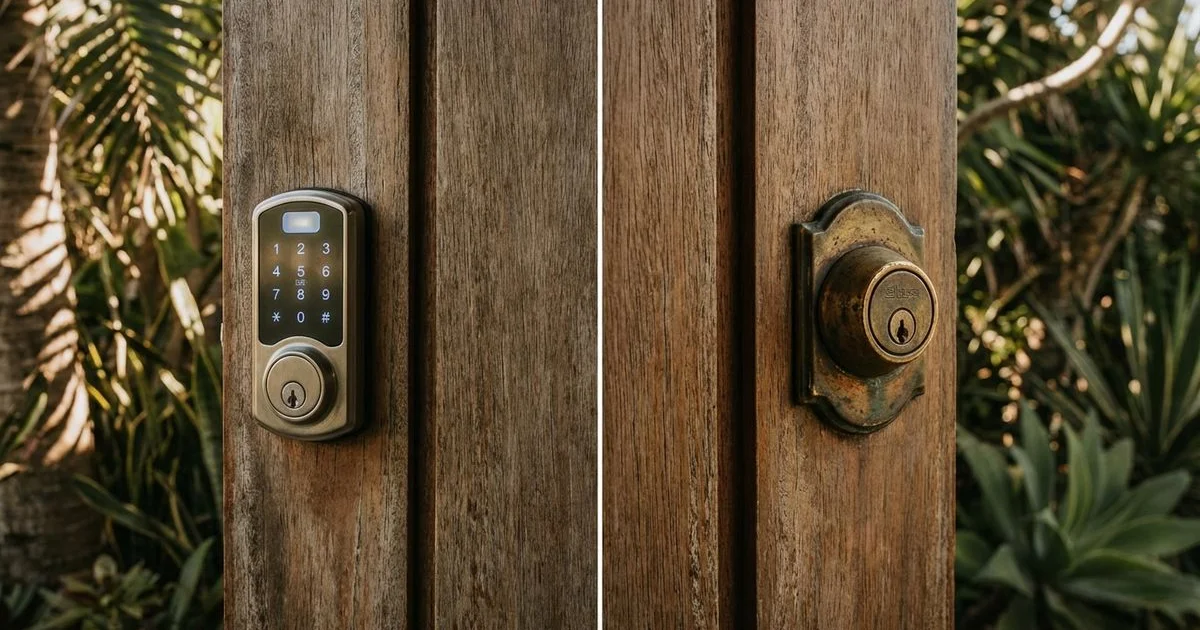
| Locks | Standard 5-pin cylinder | Anti-snap, anti-pick high-security cylinders |
| Gates | Standard swing gate | Slam-lock trellis gates inside the door |
| Windows | Standard latch | Polycarbonate “Clear Bars” or sensors |
| Lighting | Porch light | Motion-sensor LED floodlights |
Critical Upgrades for the North Coast
- Perimeter Beams: KZN intruders often test the perimeter first. Exterior beams give you an early warning before they touch the building.
- Anti-Lift Brackets: Ensure your sliding gates and doors have brackets that prevent them from being lifted off the rails. Consider upgrading your gate and garage remotes as well.
- Glazing Standards: If you replace glass, ensure it meets SANS 10400-N safety standards. We often see homeowners replace safety glass with standard float glass, which is dangerous and illegal.
Step 7: Address the Emotional Impact
The psychological toll of a break-in is real and valid. You might find yourself checking locks repeatedly or struggling to sleep.
SADAG (The South African Depression and Anxiety Group) notes that Post-Traumatic Stress is common after home invasions.
- Acknowledge the trauma: It is a violation of your sanctuary.
- Seek support: Talk to friends or neighbours. The North Coast community is tight-knit, and sharing your experience often helps.
- Professional help: If anxiety persists, contact SADAG on 0800 567 567. Many medical aids in South Africa also offer trauma counselling benefits as part of their plans.
Step 8: Prevent a Repeat Incident
Criminals often return to the same property within months. They do this because they are familiar with the layout and assume insurance has replaced old items with brand new ones.
Our experience shows that changing the “risk profile” of your house is the best deterrent.
- Change the visual cues: Install visible cameras or beams. Make it look like a harder target than it was yesterday.
- Join the community: The Ballito Neighbourhood Watch and local CPF (Community Policing Forums) are very active. Join their WhatsApp groups for real-time alerts.
- Layer your defence: Don’t rely on just one system. Combine physical barriers (locks/gates) with electronic detection (alarms/beams).
- Lighting: Dark corners are entry points. Solar motion lights are an affordable and effective upgrade.
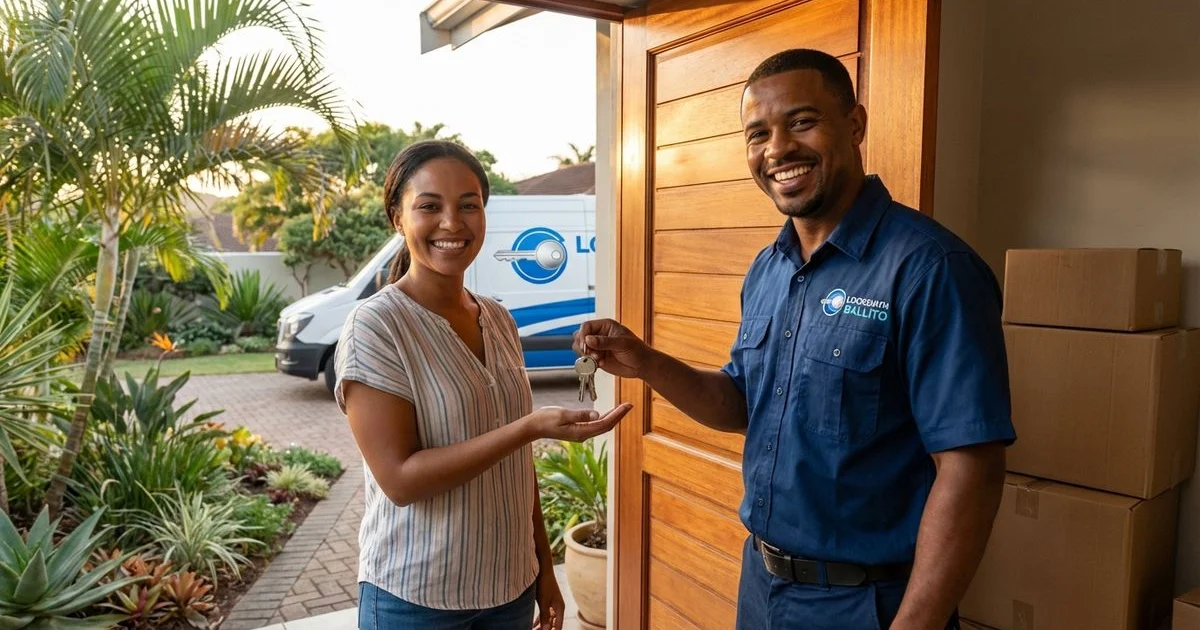
Locksmith Ballito offers emergency lock replacement services 24 hours a day, 7 days a week across the entire Dolphin Coast. We carry a full range of replacement locks and can secure your home on the same day as the break-in.
Recovery Takes Time
You will get through this. By following a methodical process—securing the site, handling the admin, and upgrading your defences—you regain control of your environment.
We are here to handle the physical security so you can focus on your family. Take it one step at a time, and don’t hesitate to ask for professional help when you need it.