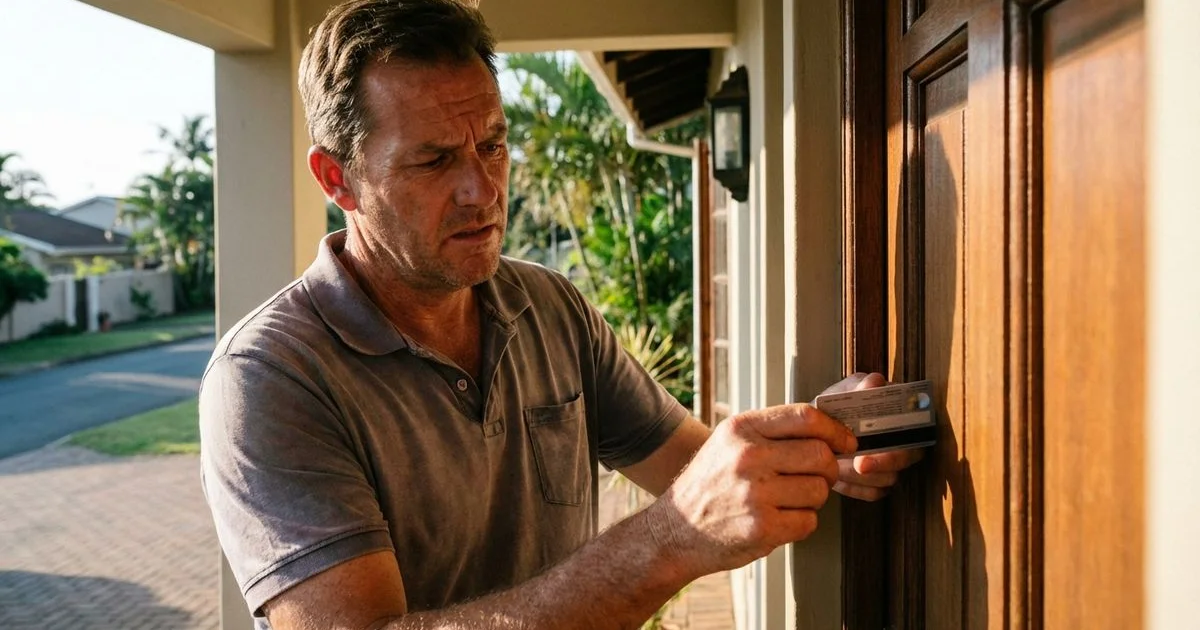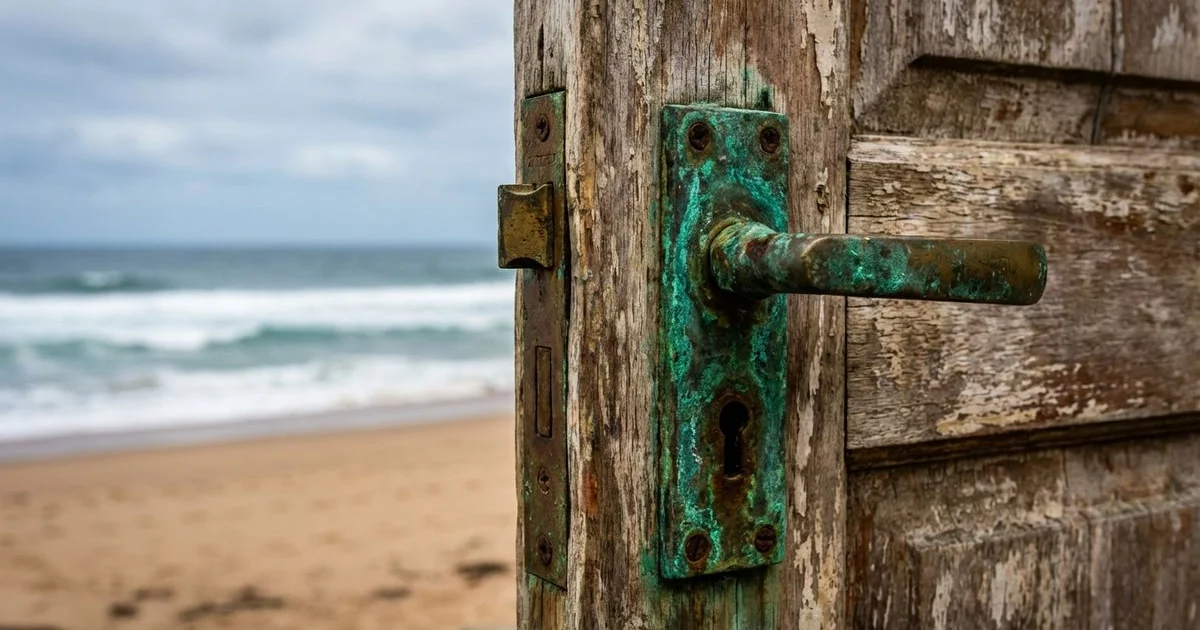
We see it constantly on the KZN North Coast—a beautiful home with rusted, seized locks that are less than three years old. Living in Ballito offers an incredible lifestyle, but the combination of high humidity and salt-laden winds creates one of the most aggressive corrosion environments in South Africa.
From our experience, many homeowners only realize the extent of the damage when a key snaps off in the door or a deadlock refuses to turn. A standard lock that might last two decades in Johannesburg can fail in 24 months here if left neglected. The good news is that you don’t need to be a metallurgy expert to protect your property.
We have compiled the exact maintenance protocols our team uses to keep locks operational in this unique coastal climate.
Understanding the Enemy: Salt Air and Humidity
The atmosphere in Ballito is deceptively corrosive. prevailing winds carry microscopic salt particles inland, coating every surface of your home. When you combine this salt layer with our region’s average humidity—which frequently spikes above 80% in January and February—you create a highly conductive electrolyte solution on your hardware.
This solution accelerates two specific types of damage:
- General Corrosion: The metal simply breaks down and rusts.
- Galvanic Corrosion: This occurs when two different metals (like a stainless steel screw and a zinc alloy handle) touch in the presence of saltwater, causing them to fuse together.
The distance from the ocean defines your risk level.
- Zone 1 (0 to 200 meters): Critical risk. Standard brass or zinc locks can seize in 2 to 3 years.
- Zone 2 (200 meters to 1 km): High risk. “Tea staining” (brown surface discoloration) appears rapidly on lower-grade stainless steel.
- Zone 3 (Beyond 1 km): Moderate risk. You are not safe from the salt mist, which travels significantly further than the visible spray.
Monthly Maintenance Routine
Our team recommends a proactive approach. You can prevent 90% of lock failures by dedicating just ten minutes a month to this simple routine.
Step 1: Clean the External Hardware
Salt residue is invisible until it starts eating the finish. Use a soft cloth dampened with warm water to wipe down the lock body, handles, and strike plates.
For sticky deposits, mild dish soap is effective, but you must dry the surface immediately and thoroughly.
Avoid these common mistakes:
- Do not use steel wool or scouring pads, as they leave iron particles behind that will rust.
- Do not use chlorine-based cleaners, which destroy the protective oxide layer on stainless steel.
- Do not use a hose or high-pressure sprayer directly on the lock mechanism.
Step 2: Lubricate with Dry Graphite
This is the single most important step for internal mechanisms. We cannot stress this enough: do not use oil-based lubricants like standard WD-40.
Oil attracts the fine coastal sand and dust that blows around Ballito. This mixture turns into a grinding paste inside your lock, wearing down the pins and springs.
Our Recommended Product: Look for Spanjaard Graphite Spray or Q-Graphite. These are readily available in South African hardware stores and are designed specifically for our climate.
How to apply:
- Insert the red nozzle straw directly into the keyhole.
- Spray two short bursts (less is more).
- Insert your key and turn it back and forth five times to coat the internal pins.
- Wipe away any black residue from the key and the door surface immediately.
Using standard oil or silicon spray on a coastal lock is a recipe for disaster. The oil traps moisture against the metal and attracts sand, often causing the lock to jam permanently within a year. Stick to dry graphite.
Step 3: Inspect the Key
A worn key damages the lock every time you use it. Check your keys for rounded “teeth” or deep grooves.
If a key looks worn, visit a professional residential security locksmith to have a new one cut to code (if possible) rather than duplicating the worn key. Duplicating a worn key merely copies the errors, leading to a “sticky” lock.
Step 4: Check the Strike Plate Alignment
Coastal homes often shift slightly due to temperature and humidity changes, causing doors to swell or warp. This misalignment forces the bolt to grind against the strike plate (the metal part on the frame).
Test the door while it is closed. If you have to push or pull the door handle hard to get the deadbolt to throw, your alignment is off. This puts immense pressure on the internal cam of the lock, leading to mechanical failure.
Seasonal Deep Clean (Every 6 Months)
We suggest scheduling a “deep clean” at the beginning and end of summer. This goes beyond the monthly wipe-down to address hidden corrosion risks.
- Combat “Tea Staining”: If you see brown discoloration on your stainless steel handles, it is likely tea staining, not structural rust. Clean it off with a specialized stainless steel cleaner or a non-abrasive metal polish.
- Protect with Wax: Apply a thin coat of quality car wax or marine wax to the exposed metal surfaces (handles and plates, not the keyhole). This creates a sacrificial barrier against the salt air.
- Tighten Fasteners: Check the screws holding your door handles and lock face. Loose screws allow moisture to seep behind the hardware, rotting the timber and corroding the mechanism from the back.
Choosing the Right Lock Material
When you replace locks along the Dolphin Coast, the material you choose dictates how long it will last. Most warranties from major manufacturers like ASSA ABLOY or Union explicitly exclude “finish deterioration” in coastal zones, so buying the right grade is your best insurance.
| Material | Coastal Performance | Risk Factor | Estimated Lifespan |
|---|---|---|---|
| Marine Grade Stainless (316) | Excellent | Lowest | 15+ Years |
| Standard Stainless (304) | Moderate | Medium | 5 - 8 Years (Expect staining) |
| Solid Brass (PVD Coated) | Good | Low | 10 - 15 Years |
| Chrome Plated Zinc | Poor | High | 2 - 4 Years |
| Standard Brass | Very Poor | Critical | 1 - 3 Years |
The “316” Difference: Always check the packaging for “Grade 316” or “Marine Grade” stainless steel. Standard “Grade 304” stainless steel is fine for Johannesburg, but within 5km of the sea, it will develop brown tea staining within months.
Padlocks and Outdoor Security
Padlocks face the harshest conditions because they are exposed on all sides. We rarely see standard brass padlocks last more than a year outdoors in areas from Salt Rock to Sheffield Beach.
For gates and sheds, look for:
- Closed Shackle Designs: High walls on the padlock body protect the shackle (the U-shaped bar) from direct salt spray.
- Drainage Channels: Quality outdoor padlocks have small holes to let water drain out rather than pooling inside.
- Keyhole Covers: A plastic or rubber cap over the keyway prevents water and sand ingress.
Brands like Viro (Marine series) or Cisa often offer specific coastal lines that perform well locally.
When Maintenance Is Not Enough
Sometimes a lock is too far gone. If you notice these warning signs, replacement is safer than repair:
- The “Crunchy” Turn: If turning the key feels like grinding coffee, the internal springs are likely corroded. See our guide on 5 signs your locks need replacing for more detail.
- Persistent Sticking: If lubrication only fixes the problem for a few days, the mechanism is physically worn.
- Rust Weeping: If rust-colored water runs down your door after rain, the lock body is rotting internally.
A Small Investment for Security
Maintaining your locks in Ballito takes minimal effort but saves significant money and stress. A simple can of Spanjaard graphite and a few minutes of cleaning can add a decade to the life of your hardware.
We encourage you to walk around your property today and check your doors. If you catch the corrosion early, you can usually reverse it.