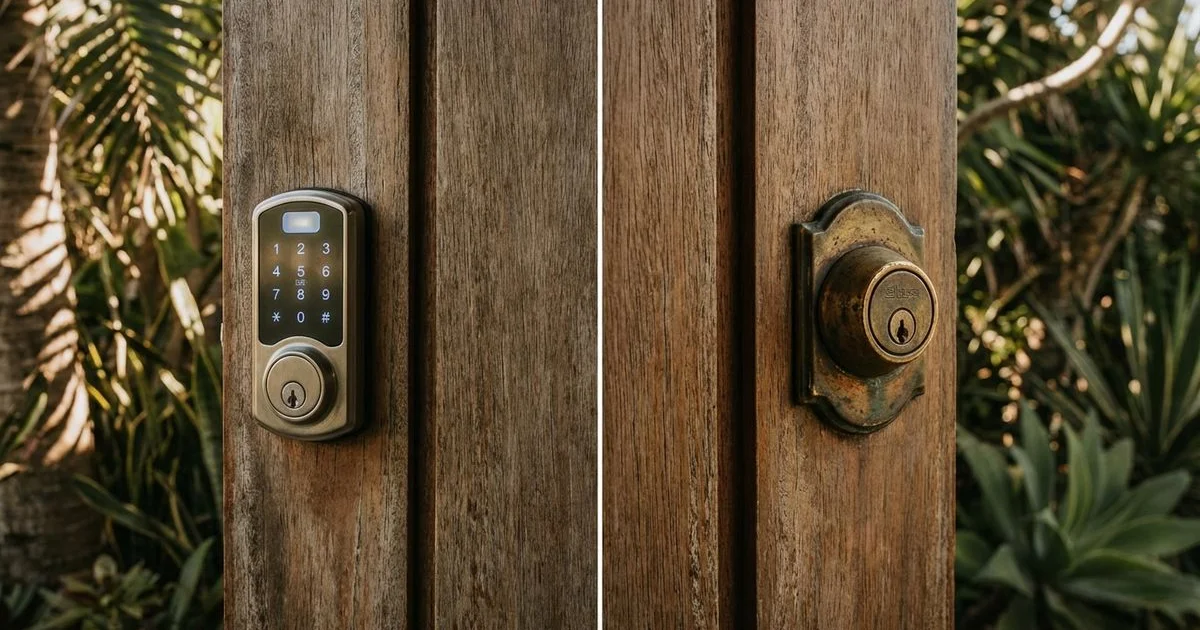
You know the specific frustration of standing in front of a locked door while fumbling through a heavy ring of metal. It is a daily reality for many property managers and business owners.
We see this scenario constantly. A simple maintenance task turns into a ten-minute ordeal because the right key is missing or unlabeled.
The solution is not just about convenience. It is about control.
We are going to break down exactly how master key systems function and why they are the standard for secure properties in South Africa.
How a Master Key System Works
A master key system is a hierarchical lock arrangement where different keys possess different levels of authority. The concept relies on specialized cylinders that can accept more than one key profile.
We design these systems to balance security with accessibility.
At its core, the system typically operates on two or three distinct levels.
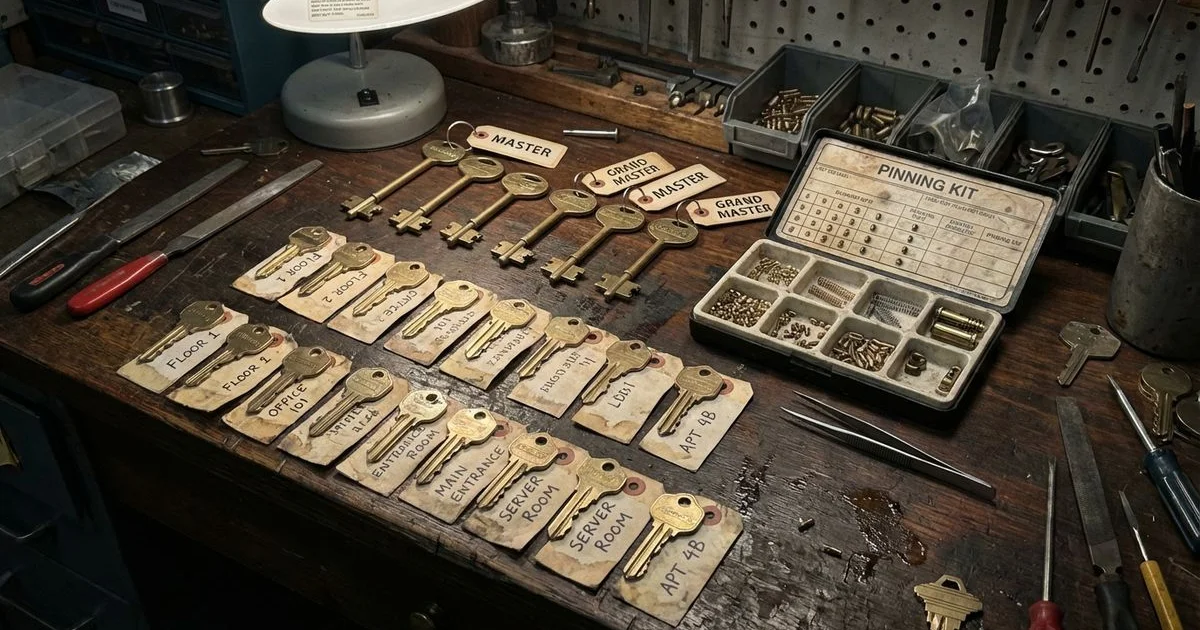
Change Keys (Individual Access)
Each door in the system has a unique key known as a change key. This key functions exactly like a standard house key.
Tenants or employees receive this key to open only their specific office or apartment. It will not work on the door next door or the main utility room.
Master Key (Universal Access)
The master key is the primary tool for management. It opens every lock within a specific group or building.
We often issue this key to the business owner, property manager, or head of security. This single key replaces the massive keyring that weighs down your belt.
Advanced Hierarchies for Large Estates
Properties like those found in Zimbali or industrial parks require more depth than a simple two-tier system. We implement multi-level hierarchies to match the organizational structure.
- Grand Master Key: This key opens every lock across multiple buildings or distinct departments. It is strictly for top-level management.
- Sub-Master Keys: These open a specific subset of locks. A floor manager might have a key that opens all offices on the second floor but none on the third.
- Construction Master Key: Contractors use this temporary key during renovations. We can instantly invalidate it once the work is complete without changing the hardware.
Who Needs a Master Key System?
Commercial Properties and Office Parks
Business owners in retail centers like Ballito Junction and industrial facilities are the primary users of these systems. The operational efficiency gains are immediate.
We recommend these systems to ensure compliance with safety protocols.
- Building Managers: Gain immediate access to all areas for maintenance checks.
- Department Heads: Access their team’s offices without compromising other departments.
- Cleaning Crews: access common areas and offices only during specific shifts.
- Safety Officers: Meet South African Occupational Health and Safety (OHS) requirements by ensuring rapid access to all rooms during a fire or medical emergency.
Multi-Unit Residential Buildings
Gated communities and apartment complexes face unique access challenges. Security is paramount, but maintenance needs are constant.
We find that master key systems solve the conflict between privacy and management.
- Body Corporates: Retain the ability to access units for emergency plumbing or electrical repairs when residents are away.
- Residents: Carry a single key that opens their front door, the communal gate, and the pool area.
- Service Staff: Access utility ducts and plant rooms without disturbing residents.
Hospitality and Guest Houses
The North Coast tourism industry relies heavily on efficient room turnover. B&Bs and boutique hotels in Ballito use these systems to streamline operations.
We install these to prevent the “lost key” nightmare that plagues reception desks.
- Housekeeping: One key opens every room for cleaning service.
- Guests: A key that works only for their room and the front gate.
- Management: Universal access to resolve lockouts or emergencies immediately.
Security Estates
Estates such as Simbithi and Brettenwood utilize these systems to manage high-traffic communal zones.
Residents generally prefer carrying one key for their home and the clubhouse rather than a bundle. The system keeps private homes secure while simplifying access to gyms, pool areas, and maintenance sheds.
A master key system does not reduce security. Each lock is just as resistant to picking as a standalone lock. The difference lies in the internal pin configuration which allows for authorized multiple key profiles.
Benefits of a Master Key System
1. Simplified Key Management
Property managers often carry keyrings weighing over a kilogram. We replace that chaotic bundle with a single, authoritative key.
This change eliminates the time wasted tagging, organizing, and hunting for keys.
2. Verified Access Control
The system enforces physical boundaries based on roles, similar to modern access control options for small businesses. A junior staff member physically cannot enter the server room or the CEO’s office.
We use this structure to remove the reliance on “trust” alone. The lock itself enforces the policy.
3. Emergency Response Speed
Seconds matter during a fire or a medical crisis. Fumbling for the correct key to open a locked door can be a dangerous delay.
Emergency services or safety officers can clear a building room-by-room using a single master key. This capability is often a critical component of a comprehensive safety plan.
4. Comparison: Standard vs. Master Key Systems
The difference becomes clear when you look at the operational impact.
| Feature | Standard Key System | Master Key System |
|---|---|---|
| Key Volume | High (Many keys per person) | Low (One key per person) |
| Access Control | Difficult to enforce | Built into the hardware |
| Key Duplication | Easy (High risk) | Restricted (High security) |
| Convenience | Low | High |
5. Audit Trails and Accountability
Professional systems include a key register. We provide a documented history of exactly who holds which key.
This register creates accountability. Employees are less likely to lend out keys when they know the specific key code is assigned to their name in the security log.
How Master Key Systems Are Created
The design process requires precision. We follow a strict protocol to ensure the system is secure and expandable.
1. Site Assessment and Planning
A qualified locksmith inspects every door on the property. We discuss your current workflow and who needs access to which areas.
2. Mathematical System Design
The locksmith calculates the keying chart. This matrix determines the hierarchy and ensures no “ghost keys” (accidental cross-keying) exist.
We plan for future expansion at this stage. A good design leaves room for new doors or buildings to be added later without scrapping the system.
3. Professional Installation
Technicians install high-quality cylinders matched to the design. We often use restricted keyways—patented cylinder profiles that cannot be copied at a standard kiosk.
4. Controlled Distribution
Keys are cut, tested, and stamped with identification codes. We hand over the keys along with the master register, establishing a secure protocol for issuing them to staff.
Avoid using standard key profiles for a master system. We strongly recommend a restricted keyway system. This requires a letter of authorization and a signatory verification to cut new keys, preventing staff from making unauthorized copies at a local hardware store.
Common Concerns
”Does This Weaken My Locks?”
No. The physical security of the lock remains high. The master key function is achieved by adding minute “master wafers” or pins inside the cylinder.
We use high-tolerance cylinders that maintain resistance to bumping and picking. The security risk is not the lock itself, but the control of the master key.
”What If I Lose the Master Key?”
This is the primary risk factor. A lost master key effectively compromises the entire group of locks.
We advise the following mitigation protocols:
- Strict Storage: Keep the master key in a key safe, not on a daily keyring.
- Restricted Keys: Use keys that cannot be duplicated without ID.
- Rekeying Plans: Have a relationship with a locksmith who can re-pin the cylinders quickly if a breach occurs.
”What Is the Real Cost?”
Pricing varies based on the hardware quality and the complexity of the hierarchy. Cheap, off-the-shelf locks are not suitable for master keying.
We see typical investments for a small commercial property in Ballito (10-20 doors) ranging from R8,000 to R20,000. This includes high-security cylinders, the design fee, and installation.
Larger systems with patented keyways (like Mul-T-Lock or Assa Abloy) will carry a premium but offer superior control against unauthorized copying.
Is a Master Key System Right for You?
Any property with more than five locked doors and multiple users will benefit from this structure.
We find that the investment pays for itself through reduced administrative time and lower long-term locksmith costs. You stop replacing locks every time a key is lost and start simply managing access.
Consult with a commercial locksmith who understands the specific security needs of the South African market. A custom-built system provides peace of mind that a heavy keyring never will.