If you have ever opened your gate remote and noticed a row of tiny switches inside, you have a dip switch remote. If your remote has no visible switches and was programmed by pressing a button on the receiver, you likely have a rolling code remote. But what is the actual difference, and why does it matter for your home security?
Understanding the technology behind your gate remote is not just a technical curiosity. It has real implications for how vulnerable your gate and garage remote system is to a specific type of crime that is increasingly common in South Africa.
We have seen firsthand how criminals exploit older technology to gain access without breaking a single lock. This method leaves no sign of forced entry, which creates a massive headache when filing an insurance claim.
In this guide, we will break down exactly how these two technologies differ. We will also look at the specific risks they pose and show you the most cost-effective way to secure your property.
How Dip Switch Remotes Work
Dip switch remotes were the standard for gate and garage door automation from the 1980s through the early 2000s. Many older systems in Ballito and along the North Coast still use this technology.
The Technology
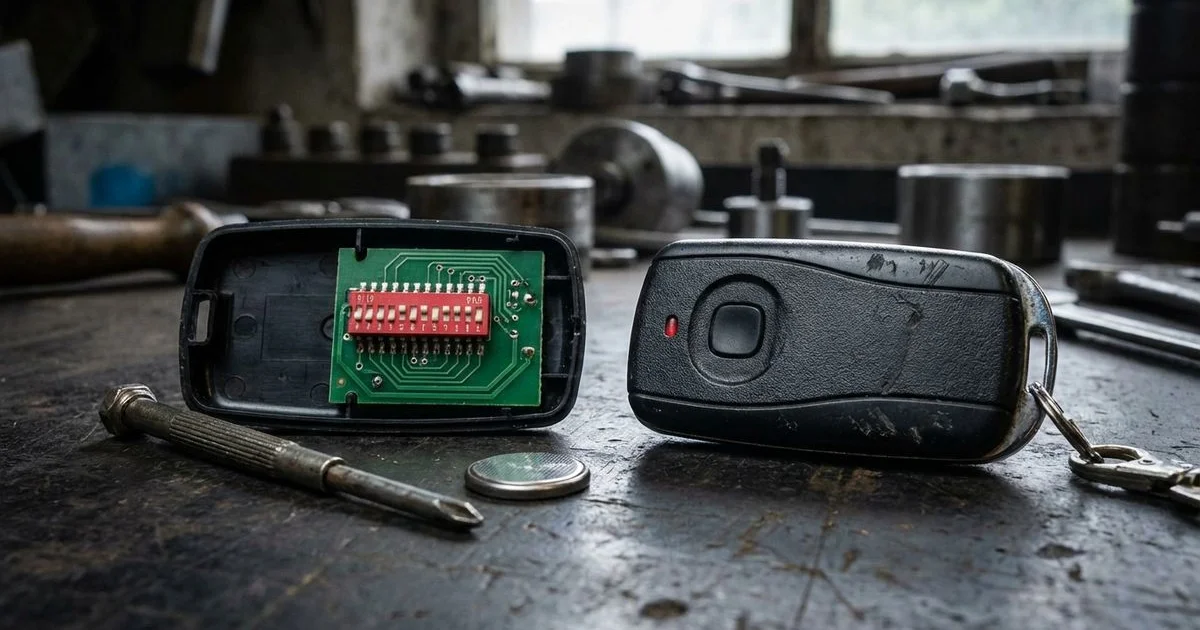
Inside a dip switch remote, you will find a row of small switches (typically 8 to 12). Each switch can be set to one of two or three positions. Usually, these are on, off, or neutral. The combination of these switch positions creates a fixed code.
When you press the button on the remote, it transmits this fixed code via radio frequency. This signal is usually sent on the 403 MHz frequency, which is common for older Sentry or Gemini systems. The receiver at your gate motor has an identical set of dip switches. If the code on the remote matches the code on the receiver, the gate opens.
The Security Problem
The fundamental flaw with dip switch technology is that the code never changes. Every time you press the button, the exact same code is transmitted. This creates two significant vulnerabilities:
1. Code Grabbing and Jamming
A criminal with a device called a code grabber can record the transmitted code from a distance. These devices are readily available online for less than R500. Once captured, this code can be replayed at any time to open your gate. The criminal does not need your remote because they have the code.
2. The Insurance Loophole
We often warn our clients about the financial risk associated with this technology. If a criminal uses a cloned signal to open your gate, there is no physical damage or forced entry. Many South African insurers will repudiate a theft claim if there is no evidence of violent entry.
3. Easy Cloning
If someone has physical access to your remote for even a few seconds, they can open it and note the dip switch positions. They can then set an identical combination on a blank remote. No special equipment is needed to create a working copy.
4. Limited Combinations
With only 8 to 12 switches and 2 to 3 positions each, the total number of possible codes is between 256 and 531,441. A brute-force device can cycle through all combinations in minutes to hours.
If your gate still uses dip switch remotes, your gate can be opened by anyone with a code grabber. This is a known security vulnerability exploited in residential burglaries across South Africa, particularly where older 403 MHz systems are still in use.
How Rolling Code Remotes Work
Rolling code technology (also called hopping code) was developed specifically to address the security weaknesses of fixed-code systems. It is now the standard for all modern gate and garage door motors, including popular brands like Centurion and ET Systems.
The Technology
Rolling code remotes use a sophisticated encryption algorithm, such as Keeloq. Instead of transmitting the same code every time, the remote generates a new code with every button press. Both the remote and the receiver share a synchronised algorithm that knows which code comes next in the sequence.
Here is how it works in practice:
- You press the remote button.
- The remote generates code number 47,293 using the shared algorithm.
- The receiver checks whether this code is the expected next code in the sequence.
- If it matches, the gate opens.
- Both the remote and receiver advance to the next code (47,294).
- The old code (47,293) is permanently invalidated and will never work again.
Most modern rolling code systems in South Africa operate on the 433.92 MHz frequency. This frequency offers better range and penetration than the older 403 MHz band.
Why This Is Secure
Code Grabbing Is Useless
Even if a criminal captures the transmitted code, it has already been used and invalidated. Replaying it will not open the gate. This effectively neutralizes the threat of simple replay attacks.
Cloning Is Extremely Difficult
Without the algorithm and the current position in the sequence, creating a duplicate remote is not feasible with consumer-level equipment. We find that this level of encryption deters most opportunistic criminals.
Massive Code Space
Rolling code systems typically use 32-bit or 64-bit encryption. This provides billions or trillions of possible codes. Brute-force attacks are impractical because it would take years to cycle through the possibilities.
Side-by-Side Comparison
| Feature | Dip Switch (Fixed Code) | Rolling Code (Code Hopping) |
|---|---|---|
| Common Frequency | 403 MHz | 433.92 MHz |
| Code Type | Fixed (never changes) | Changes every transmission |
| Security Level | Very low | High |
| Vulnerable to Grabbing | Yes | No |
| Insurance Risk | High (No forced entry signs) | Low |
| Number of Codes | 4,096 - 531,441 | Billions (32-bit/64-bit) |
| Programming Method | Match switch positions | Learn button on receiver |
| Remote Cost | R100 - R200 | R200 - R500 |
Should You Upgrade?
If your gate system still uses dip switch remotes, the answer is a clear yes. The security risk is real, documented, and easily exploited. Code grabbing is a well-known tactic used in residential break-ins across KwaZulu-Natal, including areas like Shakashead and Tinley Manor.
What Does an Upgrade Involve?
Upgrading from dip switch to rolling code does not necessarily mean replacing your entire gate motor. In many cases, only the receiver module needs to be changed.
Option 1: Replace the Receiver Only
A rolling code receiver module can be installed in place of the existing dip switch receiver. This is the most cost-effective approach if the gate motor itself is still in good working order. You can purchase a high-quality receiver like the ET Systems 1-channel or Centurion Nova receiver for under R800.
- Cost: R800 to R1,500 (including installation).
- Time: 30 to 60 minutes.
- Hardware: Requires new rolling code remotes (R200 to R500 each).
Option 2: Replace the Entire Gate Motor
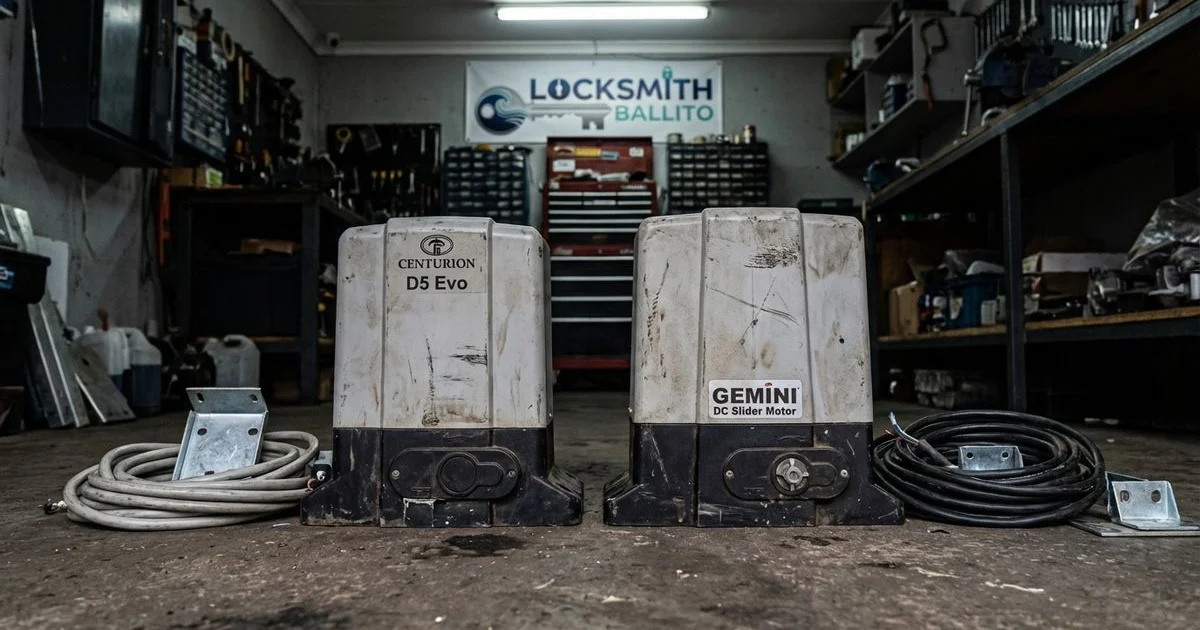
If the motor is older than 10 years or unreliable, it may make sense to replace the entire unit. Modern motors like the Centurion D5 Evo or ET Drive 500 come with rolling code technology built-in.
- Cost: R5,000 to R12,000 depending on brand and model.
- Standard: All modern motors use rolling code by default.
When upgrading to rolling code, you will need to programme new remotes for every person who uses the gate. Make sure to order enough remotes for all household members, domestic workers, and any regular visitors who need independent access.
Common Questions
”Can I Use Both Dip Switch and Rolling Code Remotes on the Same System?”
Some receivers support dual mode, accepting both dip switch and rolling code remotes. However, this defeats the purpose of the upgrade. If the dip switch channel remains active, the security vulnerability persists. We strongly recommend disabling or removing the dip switch receiver entirely when you upgrade.
”What Should I Do If I Lose a Rolling Code Remote?”
You must clear the receiver’s memory immediately. Unlike dip switch remotes where you just change the code, a lost rolling code remote is like a lost house key. Consult your user manual to wipe the memory, then re-program the remaining remotes.
”Will My Gate Still Work During Load Shedding After the Upgrade?”
Yes. Rolling code receivers work on the same battery backup system as dip switch receivers. The upgrade does not affect power requirements or battery backup performance.
”How Do I Know If My Remote Is Dip Switch or Rolling Code?”
Open the battery compartment of your remote. If you see a row of tiny physical switches, it is a dip switch remote. If you see only a circuit board with a chip and no visible switches, it is likely a rolling code remote.
Protect Your Home
Upgrading from dip switch to rolling code is one of the most affordable and impactful residential security improvements you can make for your home on the Dolphin Coast. For the cost of a receiver module and new remotes, you eliminate a well-known vulnerability that criminals actively exploit. Do not wait until after an incident to make this change.